


.png)
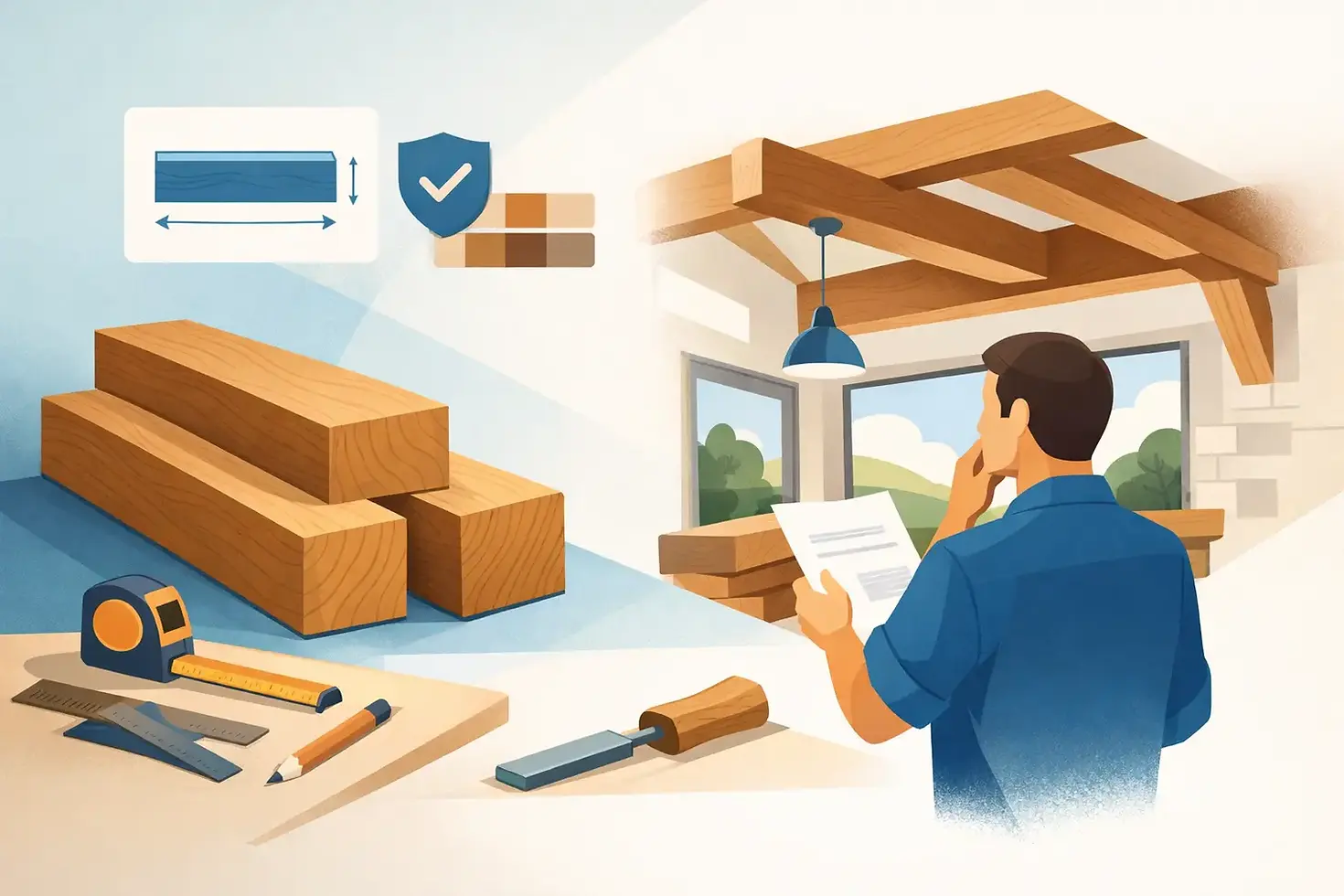
How to Choose Made to Measure Oak Beams

A fireplace rarely looks finished until the beam above it feels right. Too small, and it gets lost against the wall. Too heavy, and it can dominate the room for the wrong reasons. That is why made to measure oak beams matter - they are not simply decorative timber, but a carefully proportioned feature designed to suit your exact opening, wall space and style of home.
For many homeowners, the appeal of oak starts with character. Solid oak has weight, depth and natural variation that manufactured alternatives cannot imitate properly. Grain pattern, knots, splits and tonal changes all contribute to a beam that feels individual from the day it arrives. When it is cut and finished to your exact requirements, the result is far more considered than choosing a standard off-the-shelf size and hoping it works.
Why made to measure oak beams are worth it
The clearest advantage is fit. Fireplaces vary widely, even in homes of a similar age and style. Chimney breasts are not always perfectly square, plaster lines can be uneven, and the proportions of a room can make a standard-length beam look awkward. A bespoke beam allows you to work with the actual dimensions in front of you, not a rough guess.
There is also the question of visual balance. A well-made oak beam should frame the fireplace rather than fight with it. In a cottage or period property, a chunkier section may feel right because it echoes the age and solidity of the space. In a newer home with cleaner lines, a more refined beam profile can still bring warmth without appearing overly rustic. Made-to-measure work gives you room to get that balance right.
Practicality matters too. When a beam is prepared properly for installation, with fittings considered from the outset, the process tends to be cleaner and more straightforward. That reassurance is often just as valuable as the look of the finished piece.
Getting the size right
Choosing dimensions is where most people hesitate, and understandably so. Length is usually the starting point. Some prefer the beam to sit just beyond the width of the fireplace opening, while others want it to extend across most or all of the chimney breast for a stronger architectural presence. Neither approach is wrong. It depends on the room, the scale of the fireplace and how bold you want the feature to feel.
Depth and height have just as much impact. A deeper beam tends to feel more substantial and traditional, especially when paired with an inglenook, a stove or a textured surround. A slimmer section can work beautifully in lighter interiors where you want the warmth of oak without too much visual weight. The key is proportion. A long beam with very little depth can seem underwhelming, while a very deep beam above a modest opening can feel top-heavy.
This is where bespoke sizing earns its place. Rather than adapting your room to fit a stock product, you can choose a beam size that relates properly to the fireplace, wall and ceiling height. A made beam should look as though it belongs there.
Style choices that change the whole look
Rustic or cleaner-cut?
Not all oak beams give the same impression. Some homeowners want visible saw marks, more pronounced edges and natural cracking that suggest age and texture. Others prefer a cleaner, neater finish that still shows the oak's grain but sits more comfortably in a contemporary scheme.
Neither is better. Rustic styles often suit farmhouse interiors, cottages and homes where the fireplace is meant to feel established and full of history. Cleaner-cut beams can bridge traditional and modern spaces, especially where the room already has simple lines and restrained decoration.
Straight edges or fascia style
The edge detail influences the character more than many expect. A solid rectangular beam with defined lines gives a strong, honest look. Fascia-style oak features can be a smart option when you want the visual effect of a substantial oak beam with a different construction requirement or a lighter presentation. The best choice depends on the wall, the fireplace and the finish you want overall.
Choosing the right finish for your room
One of the biggest benefits of bespoke oak is the ability to tailor the colour and finish. Oak does not sit in one fixed shade. It can be left more natural for a lighter, fresher appearance, or finished in deeper tones that draw out grain and add age, warmth and contrast.
If your floor, furniture or existing woodwork already set the tone in the room, colour matching becomes important. A beam that clashes with nearby oak or walnut tones can stand out for the wrong reason. Equally, a beam does not need to match every other timber exactly. Often, the best result is a finish that complements surrounding materials while still allowing the mantel to retain its own identity.
A good finish should also work with how you live. Darker finishes can create drama and depth, but they may show dust more readily in some settings. Lighter finishes keep a room feeling airy, though they can read more contemporary. The right answer usually sits somewhere between personal taste and the wider palette of the space.
What handcrafted really means
The phrase gets used too freely, but in oak work it should mean something tangible. A genuinely handcrafted beam is not a generic length pulled from warehouse stock and trimmed at the end. It is selected, cut, shaped, sanded and finished with your order in mind.
That process matters because oak is a natural material with its own variations. One section may have stronger figuring, another a softer grain, another a knot pattern that gives it real presence. Working by hand allows those details to be respected rather than hidden. It also means each beam carries its own character instead of trying to look machine-perfect.
For a family workshop, this is often where service differs most from larger retailers. Questions about proportions, finish and style are part of the making process, not an afterthought. At Country and Coast, that hands-on approach is central to how a bespoke beam should be made - with care, proper timber selection and attention to how the finished piece will sit in your home.
Installation confidence matters as much as appearance
A beautiful beam still needs to go on the wall properly. For most customers, that means wanting a fitting method that feels secure and does not turn into an unnecessary project. Pre-drilled fittings and installation-ready preparation can make a real difference, especially for homeowners who want a cleaner process or are using a local tradesperson to fit the beam.
It is also sensible to think ahead about the wall surface, the construction behind it and the clearance required around a stove or fire. Exact requirements will vary depending on the appliance and fireplace set-up, so this is an area where careful measuring is essential. Bespoke does not mean complicated - but it does mean being precise.
Sustainability should be part of the conversation
Oak is a timeless material, and if it is being brought into the home, it should be sourced responsibly. Certified sustainable timber gives customers more confidence that the beauty of the finished beam is matched by integrity in how the wood was obtained.
This matters particularly with a feature intended to last for many years. A made-to-order oak beam is not a throwaway purchase. It is a long-term part of the room, often becoming the focal point of family life, seasonal decorating and everyday living. Choosing well-made solid oak from responsible sources makes that investment feel sound in more ways than one.
A few things to have ready before ordering
Before choosing made to measure oak beams, it helps to have clear dimensions, a sense of your preferred beam thickness and a few photographs of the fireplace area. Knowing whether you want a more rustic or cleaner finish will speed things up as well. If you already have nearby wood tones in the room, noting those can help when selecting a stain or finish.
It is also worth deciding what you want the beam to do visually. Should it become the main focal point, or should it support the fireplace more quietly? That one decision often shapes the right size, finish and style more than any trend ever will.
The best oak beam is the one that looks as though it was always meant for that wall. When the measurements are right, the finish suits the room and the craftsmanship shows in the details, the whole fireplace settles into place. And that is when a house starts to feel a little more like home.


Comments