


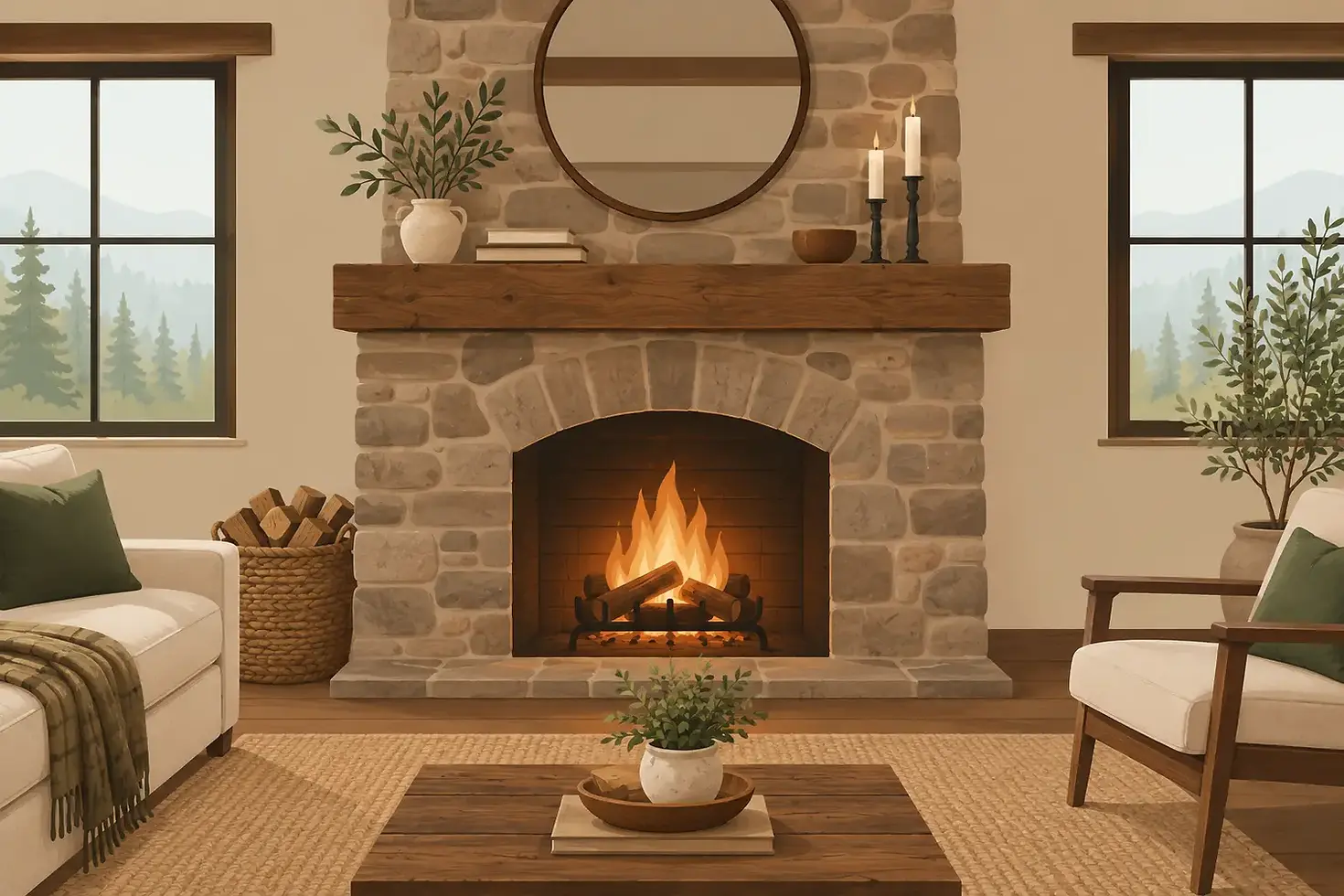
How to Create a Rustic Fireplace That Feels Timeless

A fireplace can have a perfectly working stove or fire, yet still feel like an afterthought if the surrounding details are too thin, too glossy or simply out of proportion. The secret to how to create a rustic fireplace is not filling the room with country-themed accessories. It is choosing a few honest materials, giving them enough visual weight, and allowing their natural character to do the work.
For many British homes, solid oak is the element that brings the whole scheme together. Set above a hearth, a properly sized oak beam mantel creates a clear focal point and gives stone, brick, plaster or a log burner something substantial to belong to. The result should feel settled, warm and personal, rather than newly assembled.
Start with the fireplace proportions
Rustic style relies on balance. Before choosing a beam or finish, stand back and look at the full wall: the fire opening, hearth, chimney breast and the room around it. A mantel that is too short can make the fireplace look pinched. One that is overly deep or heavy for a small opening can dominate the space unnecessarily.
As a starting point, allow the beam to extend beyond each side of the opening so it frames the fire rather than merely sitting above it. The right overhang depends on the width of the chimney breast and whether you want a traditional inglenook feel or a cleaner, more contemporary country look. In a compact sitting room, a slimmer beam with a generous length can often look more considered than a very chunky, short mantel.
Depth matters too. A deep beam creates a strong shelf for a simple vase, candlesticks or seasonal greenery, but it must not project so far that it feels intrusive. Measure the space carefully, including doors, walkways and nearby furniture. Made-to-measure sizing is particularly valuable where walls are uneven, alcoves are close by or the fireplace is not quite centred.
Choose oak with real character
A rustic fireplace needs a material with depth, texture and variation. Solid oak has all three. Its grain, knots, small splits and changes in tone are not defects to hide - they are the marks that make each beam individual.
The style of cut will affect the final look. A cleaner, straighter beam suits a pared-back country interior, especially when paired with limewashed walls or simple plaster. A more characterful beam, with visible grain movement, waney edges or hand-finished detailing, brings a stronger farmhouse feel. Neither is inherently more rustic. The best choice is the one that feels in keeping with the age and character of your home.
Avoid trying to make every surface match exactly. Oak naturally varies, even within one piece of timber, and that variation is part of its appeal. Instead, look for a finish that relates to your existing floor, furniture or exposed woodwork. A warm medium oak can soften a room with grey stone and black metal. A darker, aged finish can add depth against pale walls. Lighter finishes are often well suited to coastal, Scandinavian-influenced or modern country schemes.
At Country and Coast, each oak beam is made by hand in our North Wales workshop, allowing the length, section size and colour to be chosen for the fireplace rather than selected from a standard shelf. That personal approach is especially useful when you are trying to achieve an understated, convincing result.
Build the surround from honest textures
The most successful rustic fireplaces are layered, not crowded. Begin with the larger architectural materials: the hearth, the wall finish and the mantel. Then add only what earns its place.
Stone is an obvious partner for oak, but it does not need to be a grand, traditional surround. A slate hearth gives definition beneath a timber beam and works well with both wood burners and open fires. Sandstone, limestone and reclaimed brick bring softer, more irregular texture. If a full stone surround is beyond the budget, a simple plastered chimney breast with an oak mantel can still feel rich and settled.
Brick deserves a little restraint. Exposed brick can look beautiful in an older property, but highly uniform new brickwork may feel more industrial than rustic. Limewashed or softly toned brick often sits more naturally with oak than bright red, heavily pointed brick. Similarly, smooth tiles can work around a stove, but choose muted colours and low-sheen finishes if you want the beam to remain the main feature.
The aim is contrast without competition. If your beam has plenty of knots and saw marks, a quieter hearth and wall surface will let it stand out. If you are using dramatic stone, choose a simpler beam finish. Rustic does not mean every material must be rough at once.
How to create a rustic fireplace around a stove
A log burner is often the heart of a rustic scheme, but it sets practical limits as well as visual ones. The stove manufacturer’s instructions, the flue arrangement and applicable building regulations must guide the design. Clearances around a stove and above it are not optional, and the safe position of a combustible oak beam will depend on the appliance, heat output, shielding and installation details.
Speak to a qualified installer before ordering or fitting a mantel. They can confirm the required distances and whether a heat shield, non-combustible lining or a different beam position is needed. This is one area where a beautiful idea should never be allowed to overrule safe installation.
Once the practical arrangement is settled, keep the styling close to the stove’s own character. Matte black metal, a simple slate hearth and aged oak are a dependable combination. A cream chimney breast can brighten a darker room, while soft clay, warm white or muted green will make the timber feel especially welcoming. If your stove is contemporary, do not assume a heavily distressed surround is required. A clean oak beam can bridge traditional material and modern form very successfully.
Keep styling useful and restrained
The mantel is a shelf, but it should not become storage. One large piece of pottery, a framed print, a small arrangement of dried stems or a pair of candleholders is usually enough. A mirror can work beautifully above a fireplace in a smaller room, though it is best kept simple in shape and frame so it does not compete with the timber.
For a lived-in look, choose objects with a connection to the home: a hand-thrown vase, an old brass clock, family photographs in understated frames, or books placed nearby in a basket. Natural textiles add warmth too. A wool rug, linen curtains and a basket for kindling can carry the fireplace’s character into the rest of the room without making it feel staged.
Be cautious with artificial distressing, slogan signs and too many small ornaments. They can turn a characterful fireplace into a theme. Real rustic style has breathing space. It feels collected gradually, with materials chosen because they will wear well and become more familiar over time.
Finish the beam for the room you actually have
A rustic oak mantel should not be chosen in isolation. Take account of light levels, wall colour and the undertones already present in the room. North-facing rooms can make a dark finish appear almost black, whereas a sunny south-facing room may carry deeper tones comfortably. Samples are helpful, but view them beside the fireplace wall at different times of day before making a final decision.
Think about maintenance as well. An oiled or waxed finish can enhance the timber’s grain and offers a natural appearance, though it may benefit from occasional care over the years. A more sealed finish can be easier to wipe down in a busy family room. Neither choice is automatically better - the right one depends on the appearance you want and how the space is used.
Installation deserves the same care as selection. A solid oak beam is weighty, so it needs secure fixings into suitable masonry or structure. Pre-drilled fittings make the process more straightforward, but uneven walls should be assessed properly before fitting. A beam installed level, at the correct height and with clean joins to the wall will always look more convincing than one rushed into place.
Give the finished fireplace time to settle into the room. Light the stove on a quiet evening, place only the pieces you genuinely enjoy around it, and notice where the eye naturally rests. The finest rustic fireplaces do not try too hard. They simply bring timber, texture and warmth together in a way that makes home feel more like home.


Comments