


.png)
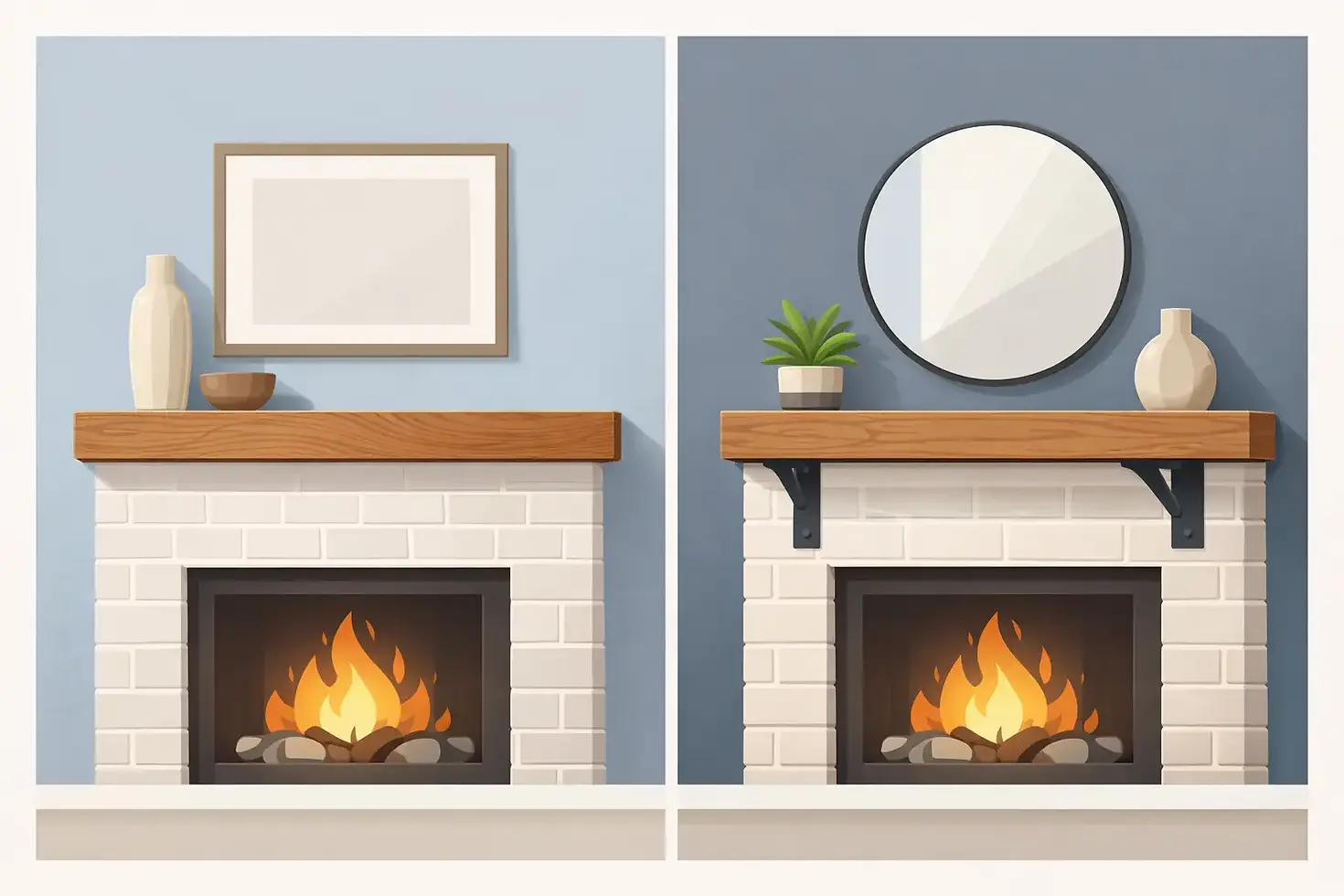
Concealed Versus Visible Mantel Brackets
- info1235355
- 5 days ago
- 6 min read

A solid oak mantel should feel as though it belongs to the fireplace, not as though it has been added as an afterthought. That is why the choice between concealed versus visible mantel brackets matters well beyond installation day. It affects the line of the beam, the character of the room, the weight the wall can safely carry and how confidently the mantel will serve your home for years to come.
For many homeowners, concealed fittings create the cleanest finish. For others, visible brackets or corbels are part of the appeal: an honest, traditional detail that gives an oak beam even more presence. Neither is automatically better. The right choice begins with your wall, your fireplace design and the look you want to live with.
What concealed mantel brackets look like
Concealed brackets are hidden within the oak beam once it has been fitted. In most cases, a set of strong metal rods or a purpose-made hidden support system is fixed securely into the wall. Matching holes are drilled into the rear of the mantel, allowing the beam to slide onto the supports and sit close against the wall.
The result is a floating appearance. There are no visible fixings beneath the shelf and no interruption to the natural grain, hand-finished edges or substantial face of the oak. This makes concealed fittings especially well suited to clean-lined fireplaces, plastered chimney breasts and homes where the mantel itself is intended to be the main feature.
A hidden fixing can also make a chunky oak beam appear lighter than it is. That contrast works beautifully in both contemporary spaces and restrained country interiors, where a single piece of characterful timber provides warmth without making the fireplace feel overly ornate.
When hidden fittings are the natural choice
Choose concealed brackets when the wall is sound masonry or another suitably strong structure, and when the mantel is being used mainly for decorative objects rather than heavy loads. They are particularly effective where a beam is fitted above a simple opening, a wood burner or a modern inset fire.
Accuracy matters. The support rods, wall fixings and holes in the rear of the beam must align precisely, otherwise the mantel will not sit level or flush. A made-to-measure oak mantel with pre-drilled fittings removes much of that uncertainty, but the wall still needs careful measuring and proper preparation before installation.
Concealed systems are less forgiving of uneven walls. Old chimney breasts often have slight dips, proud plaster or irregular brickwork, so it is worth checking the surface before ordering. A small gap may be unavoidable in a character property, although it can often be planned for rather than discovered on fitting day.
The appeal of visible mantel brackets
Visible brackets remain on show below the mantel. They may be crafted timber corbels, black steel brackets, traditional cast-style supports or a simpler shelf support chosen to complement the room. Unlike concealed fittings, they make the method of support part of the design.
For a rustic cottage fireplace, reclaimed brick surround or period-inspired renovation, that can be exactly right. Oak has a natural honesty to it: knots, grain changes and small variations in tone tell the story of the timber. Visible support can reinforce that sense of craft and substance rather than hide it.
Timber corbels create a softer, more heritage-led look, especially when made from oak to match the beam. Steel brackets offer a sharper contrast and can suit industrial, farmhouse and modern country schemes. The best choice is usually one that relates to another material already present in the room, such as black stove hardware, iron door furniture or exposed timber.
Where visible supports make practical sense
Visible brackets can be a sensible answer where the wall is less predictable, where the mantel needs additional support or where a heavier beam is planned. They may also be preferable if you would like the option to remove or adjust the shelf more easily in future.
That said, visible does not mean any bracket will do. Brackets must be rated for the load, fixed into a suitable structural background and positioned to support the beam rather than merely decorate beneath it. A substantial solid oak mantel has real weight, particularly at longer lengths and deeper sections.
The bracket position needs thought too. Supports pushed too close to the centre can make the ends feel unsupported, while brackets too close to each edge can look cramped. As a visual starting point, place them with a balanced overhang at either end, then adapt the layout to the beam size and the strongest fixing points in the wall.
Concealed versus visible mantel brackets: the key differences
The biggest difference is visual. Concealed brackets let the oak appear to float, directing attention to the beam's clean silhouette and natural finish. Visible brackets add another layer of detail below the beam, making the fireplace feel more traditional, architectural or deliberately rustic.
The second difference is the wall. Concealed rod systems depend on secure, accurate fixing into a capable substrate. Brick and block walls are commonly well suited, provided their condition is good and the correct fixings are used. Plasterboard alone is not enough to carry a heavy solid oak beam. Where a stud wall is involved, the support must be fixed into substantial timber noggins or studs, with appropriate planning before the wall is closed or finished.
The third difference is flexibility. A concealed beam is beautifully minimal, but its fitting positions are predetermined. Visible brackets can offer more tolerance where wall conditions are awkward, and their placement can sometimes be adjusted around obstacles. They also make a practical choice for an existing fireplace wall that cannot easily take deep hidden rods.
Finally, consider upkeep. Both options are straightforward once fitted properly. A concealed mantel has fewer places for dust to settle and gives an uninterrupted surface below. Visible corbels or steelwork need occasional dusting, but they can also protect the beam from appearing unsupported when it is styled with larger seasonal arrangements or family photographs.
Choose support around the mantel, not just the style
A common mistake is to decide on a fixing method after falling in love with a photograph. Start instead with the beam dimensions. Length, height and depth all influence the weight and leverage placed on the wall. A slim shelf for a small opening asks very different things of its fittings than a deep, full-width oak beam spanning a wide chimney breast.
Then assess what is behind the finished wall. A solid brick chimney breast, a blockwork wall, a lined fireplace opening and a plasterboard partition each call for a different approach. If you are unsure, ask a competent installer to inspect it before drilling. This is especially worthwhile in older homes, where previous alterations may not be obvious from the surface.
Think honestly about use as well. A mantel carrying a few lightweight frames and a vase is one thing. A beam likely to hold a mirror, a collection of ceramics or festive decorations needs support chosen with that loading in mind. The oak is durable, but the safety of the installation rests on the wall fixings and the quality of fitting.
Keep heat and clearance in the plan
Where a mantel sits above a working stove or open fire, fitting choice is only one part of the decision. The position of the beam must follow the appliance manufacturer's clearance guidance and any relevant building requirements. Heat output, the type of fire, the depth of the mantel and the fireplace construction can all affect the safe distance needed.
Oak is a wonderful material for bringing warmth and texture to a fireplace wall, but it is still timber. Never assume a standard height will be suitable for every stove or fire. Confirm the required clearances before the mantel is made and before any holes are drilled.
A finish that lets the oak do the work
Whether your brackets are hidden or proudly on display, the beam should remain the heart of the arrangement. A lightly sanded, natural oak finish can sit beautifully against pale plaster and limestone. A darker bespoke tone can help a mantel connect with aged floorboards, ceiling beams or existing furniture.
At Country and Coast, each solid oak beam is made individually in our Llandudno workshop, so fitting holes, dimensions and finish can be considered as part of the whole piece rather than treated as an afterthought. That care is particularly valuable with concealed fittings, where precision makes all the difference to the finished line.
If your room calls for a quiet, floating focal point, concealed brackets are hard to beat. If it needs the reassuring detail of oak corbels or metalwork, visible support can give the fireplace more depth and history. Let the wall dictate what is safe, then let the character of your home decide what feels right.


Comments